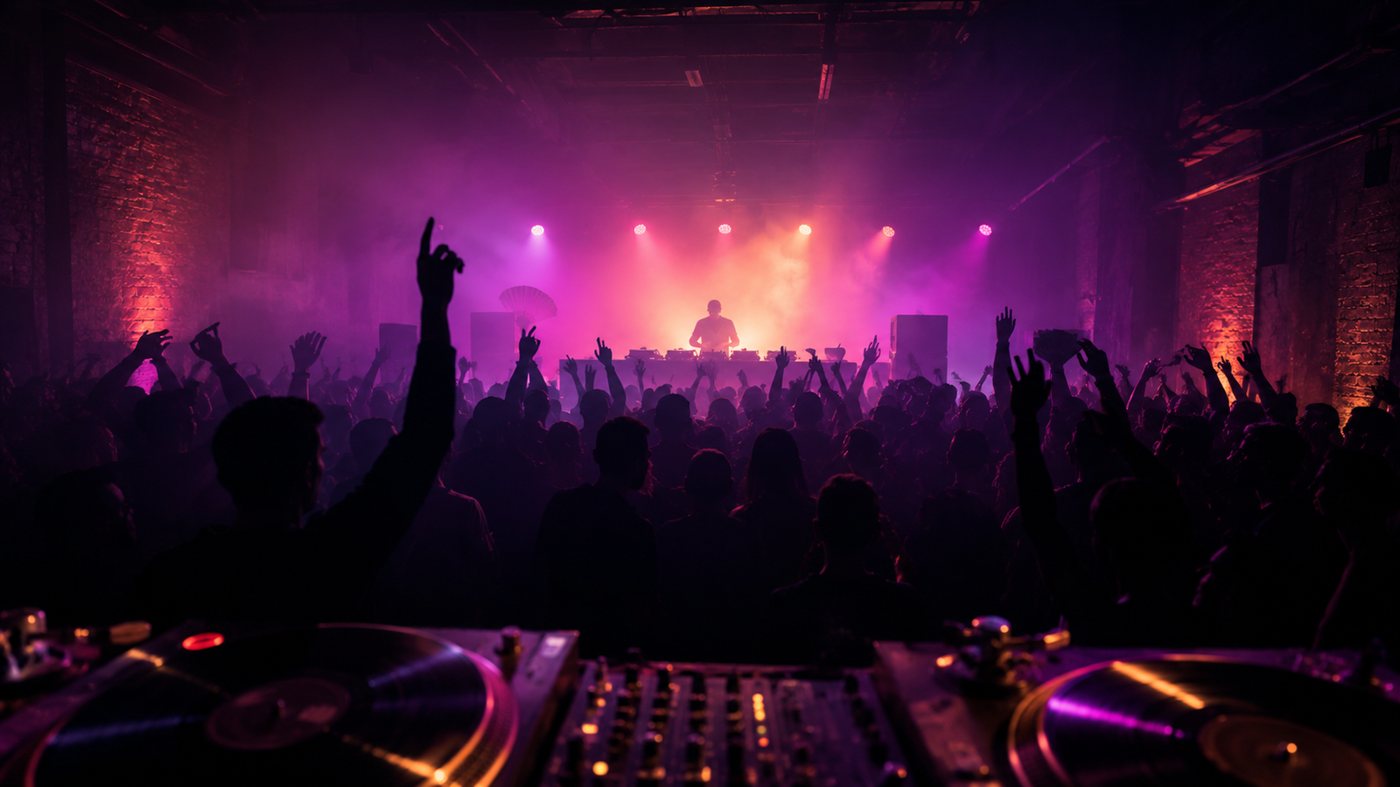
"Bass music" is a genre label that covers more sonic territory than almost any other in electronic music. It's the reason two people can both say they like bass music and then have completely different reactions when they meet at an event — because one came for melodic dubstep and the other came for 145 BPM riddim that sounds like industrial machinery. This guide maps the territory.
What All Bass Music Has in Common
Despite the range, bass music subgenres share a few consistent characteristics: sub-bass frequencies that you feel in your chest rather than just hear, syncopated rhythms that prioritize percussive impact, and an emphasis on the drop as a structural element. Most bass music tracks follow a tension-and-release architecture — a buildup that creates expectation, and a drop that delivers it, often violently.
The bass itself is usually created through heavy modulation of synthesizers (particularly the use of FM synthesis, wavetable synthesis, and aggressive filtering) rather than sampled instruments. The "wobble" of classic 2012-era dubstep, the grinding distortion of riddim, and the clean, pitched-up synths of future bass are all products of these synthesis techniques applied differently.
The Major Subgenres
What's Currently Happening in SoCal
The Southern California bass music scene in 2026 is dominated by Bassrush events (Insomniac's bass arm), several independent promoters in the OC/IE corridor, and a growing number of underground nights at smaller venues in the Arts Districts of both LA and Santa Ana. The crossover between bass music and LA's emerging "midnite" club scene — late-night events with lower-BPM, darker aesthetics — is producing some of the most interesting sounds currently coming out of the region.
Bass Artists: You Belong on KEEPITIL
We're the platform for California's underground electronic artists across every genre. Apply now.