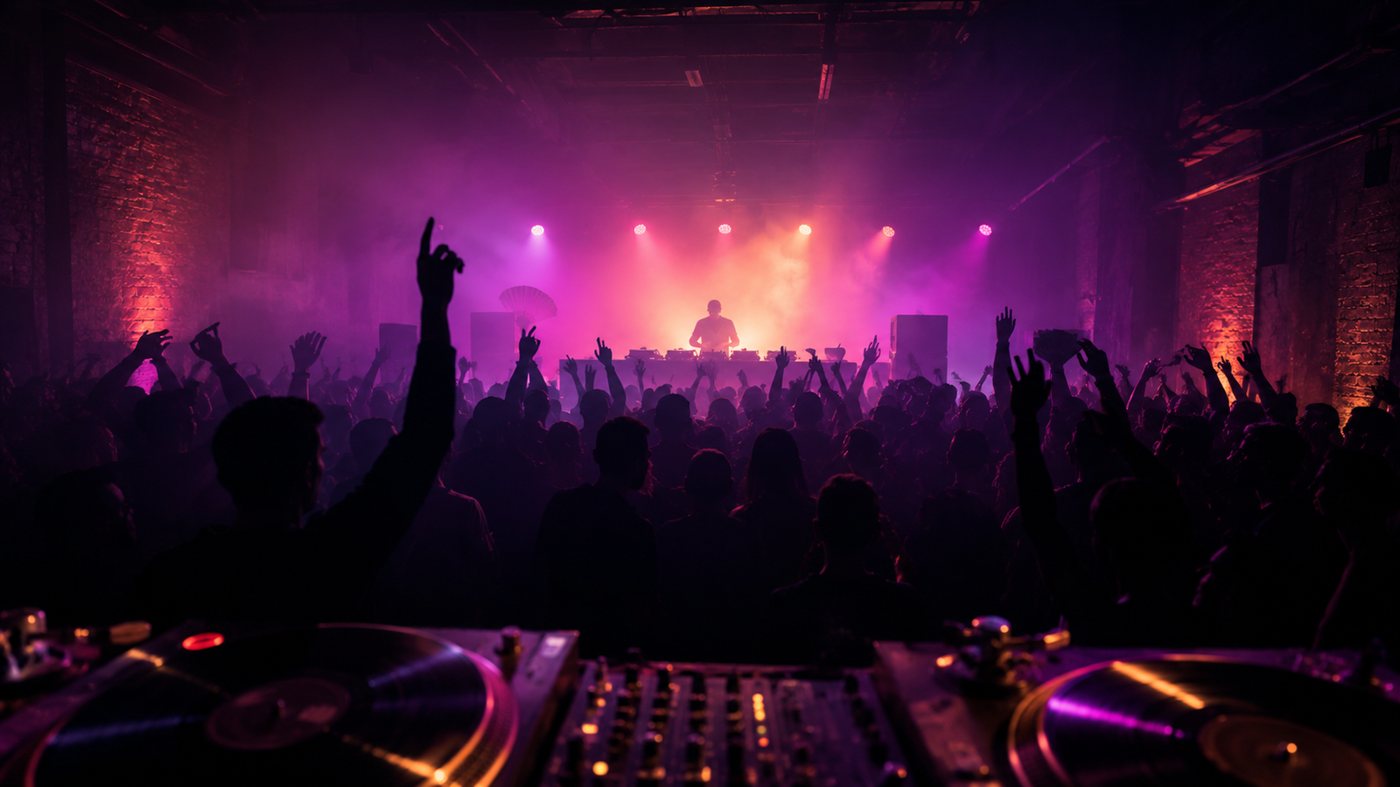
House music is now a global language played on every continent, in stadiums and warehouses, at festivals and in dimly lit clubs. But it started in one specific place, for one specific community, for very specific reasons — and understanding that origin still matters when you're in a room in Orange County at 2AM feeling something you can't quite name.
Chicago, 1977–1985
The Warehouse was a nightclub on South Jefferson Street in Chicago that opened in 1977. Its DJ, Frankie Knuckles, played a mix of Philadelphia soul, European disco, and synthesizer-driven dance music for a crowd that was predominantly Black and gay — communities that had been pushed out of mainstream nightclubs and disco venues as the "Disco Sucks" movement shuttered that world in the early 1980s.
What Knuckles did to that music — editing it on reel-to-reel tape, extending breakdowns, layering drum machine patterns underneath — was house music before the genre had a name. The regulars called it "that music they play at the Warehouse." The abbreviated form — "house music" — stuck.
The Chicago Sound Takes Shape
By 1983, a second venue called Music Box had opened with DJ Ron Hardy — rawer, more aggressive, more experimental than the Warehouse. A producer named Jesse Saunders released what is generally considered the first commercially pressed house record in 1984. Larry Heard — known as Mr. Fingers — created "Can You Feel It" in 1986, a piece of music so perfectly assembled that it still sounds current forty years later. Jamie Principle and Frankie Knuckles recorded "Your Love" in a basement on a drum machine and a bassline. These recordings circulated as cassette tapes before anyone thought to release them as records.
New York, London, and the Global Export
House music reached New York through the club Paradise Garage, which DJ Larry Levan ran as a near-religious experience for its community. It crossed the Atlantic to the UK through a specific moment in 1988 called the Second Summer of Love — when acid house (a mutant Chicago subgenre built on the Roland TB-303 bassline synthesizer) combined with MDMA use and outdoor raves to create a cultural moment that permanently changed British music and club culture.
California's Relationship With House
California developed its own house music culture through a different path than the East Coast. Los Angeles had a strong soul and funk tradition that fed into the early house scene differently than Chicago did. By the 1990s, LA clubs like The Arena and clubs in the San Fernando Valley were developing what would become the West Coast house sound — more influenced by Latin rhythms, funk, and the specific demographics of Southern California than by the Chicago original.
Where We Are in 2026
The tech house boom of the 2020s — driven by artists like Chris Lake, Fisher, and John Summit — brought house music to its largest mainstream audience ever while simultaneously pushing the underground to define itself more clearly in opposition to the mainstream. In OC and LA right now, the underground house scene is where the music's original values — community, identity, dancing — are being preserved and extended by artists like Groove Trooper, SWERVE, and others who know why this music matters.
Experience OC & LA House Music Live
Find underground house events happening this weekend across Orange County and Los Angeles.